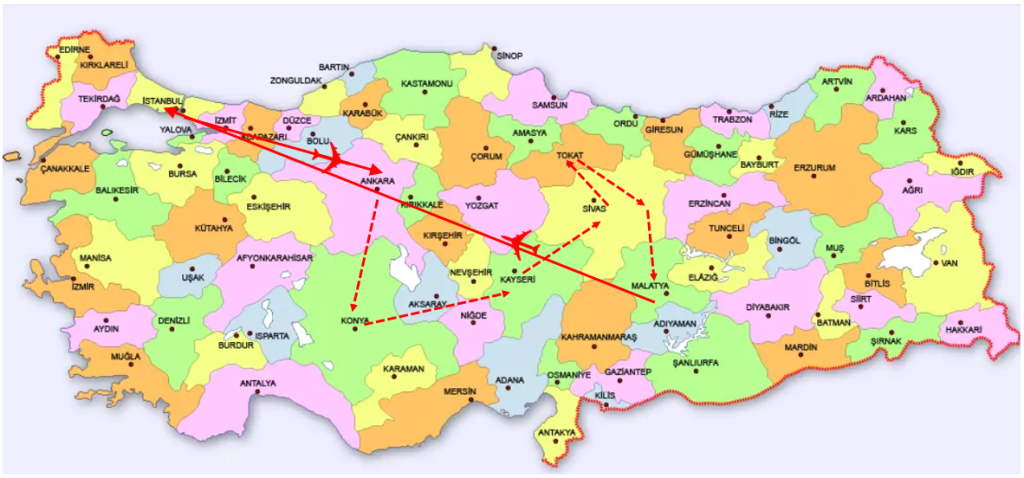
This journey is conceived not as a sequence of visits, but as a continuous act of reading—reading stone, wool, geometry, sound, and landscape as interconnected texts of Anatolian civilization, more based on Seljuk civilization.
Across Seljuk capitals, caravan routes, high plateaus, and nomadic pastures, we follow cultural systems shaped by order and movement: the measured geometry of madrasas, the ethical structure of artisan guilds, and the seasonal cosmology of pastoral life. These systems are not isolated; they echo one another.
Stone monuments, carpets, and flatweaves serve as our most intimate guides. They are not merely decorative objects. What stone expresses in permanence, wool expresses in mobility. This dialogue between fixed architecture and moving textile lies at the core of Anatolian cultural continuity.
Equally important is how knowledge is transmitted: through guild ethics, oral instruction, embodied practice, and ritual & music. By visiting workshops, markets, shrines, and living communities, we encounter culture not as heritage, but as process.
Travel deep into the cultural heart of Anatolia on a journey tracing Seljuk architecture, historic trade routes, and living textile traditions. From the tile workshops of Konya and the madrasas of Sivas to the nomadic pastures of Yama Mountain and the carved stone of Divriği, this journey connects monuments with material culture.
We meet artisans, musicians, and nomadic families, examine carpets and flatweaves in their social context, and explore how belief, geometry, and landscape shape enduring traditions.
Designed for intellectually curious travelers, collectors, and scholars seeking depth rather than spectacle.
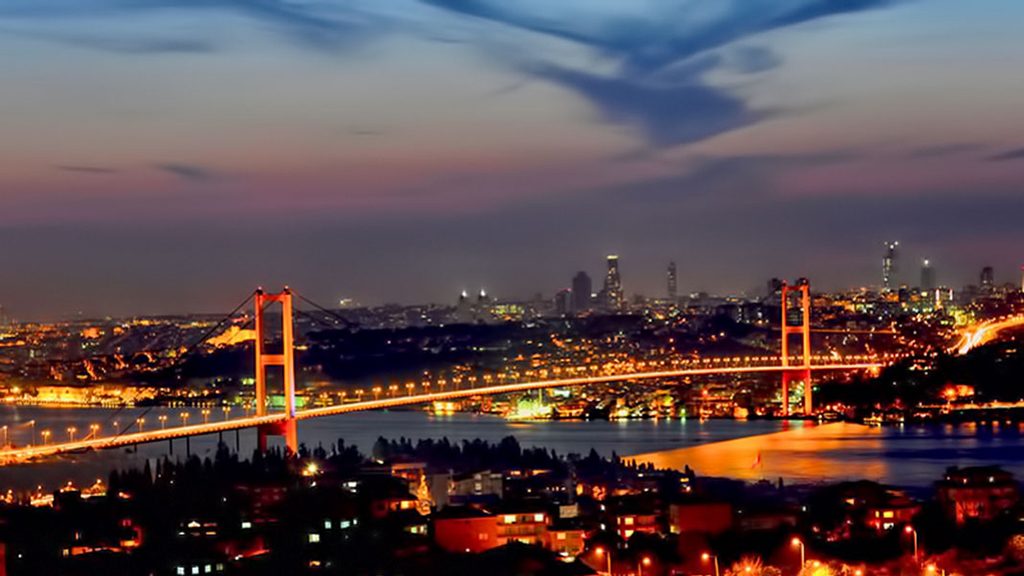
Day 1, October 16, 2026, Friday – Arrival and Orientation | Istanbul
We arrive in Istanbul according to our individual flight schedules and transfer to our hotel. The remainder of the day is intentionally left unstructured, allowing time to rest, adjust to the rhythm of the city, or take a quiet walk nearby.
At 18:30, in the early evening, we gather as a group for introductions and an overview of the historical, architectural, and textile themes that will guide our journey through Seljuk Anatolia.
19:00 Welcome dinner, at we. Overnight in Istanbul.
Day 2, Obrober 17, 2026, Saturday– From Imperial Capital to Seljuk Heartland | Istanbul → Ankara
07:30-08:30 Early in the morning, we transfer to Istanbul Airport.
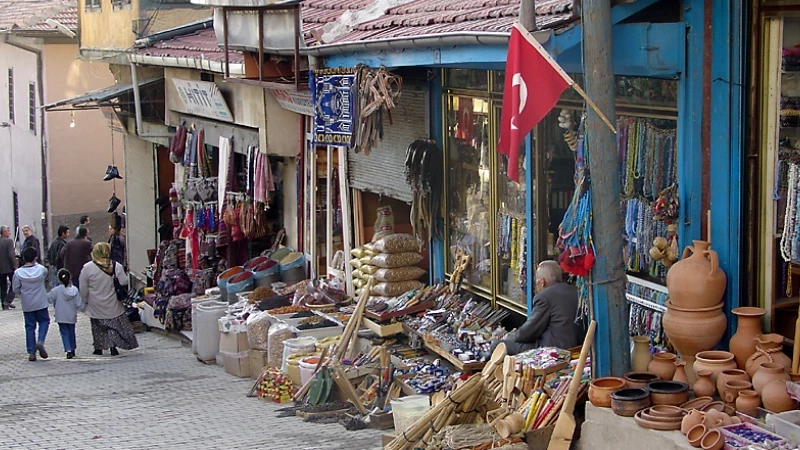
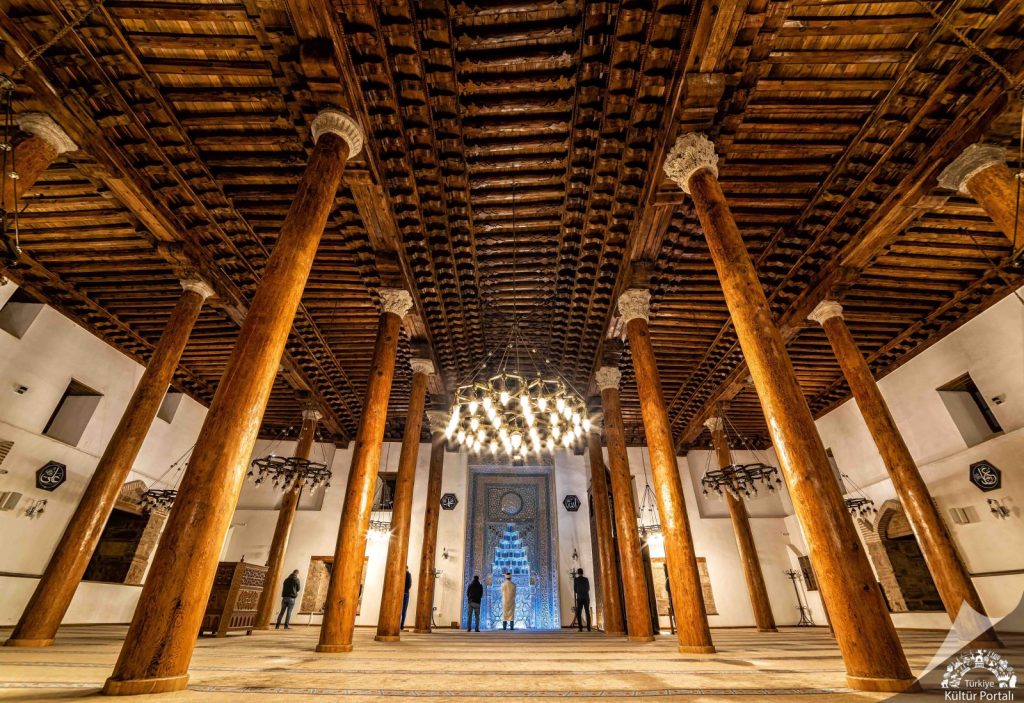
10:00-11:05 We fly to Ankara. In the late morning, we walk through Ankara Castle and its surrounding market quarter, where trade, worship, and daily life once functioned as a single, integrated system. At the Ahi Evran Mosque, we explore the intricately carved wood architecture in the surrounding market, discussing how crafts such as carpet weaving and metalwork were regulated as much by ethical codes as by technical skill. Nearby, at Arslanhane Mosque, we observe the reuse of materials and structural clarity characteristic of early Seljuk architecture.
After lunch, we turn to the Ethnography Museum, treating it as a text rather than a display. Here we examine woodwork, metalwork, local textiles and jewelry, as well as the dervish tradition of Sufiism. We focus on restrained palettes, disciplined borders, and dense symbolic systems, reading these crafts as records of belief, hierarchy, and daily life rather than as decorative objects.
Dinner at 19:00, Overnight in Ankara.
Day 3 October 18, 2026, Sunday– Sufism, Urban Culture, and Textile Aesthetics | Ankara → Konya
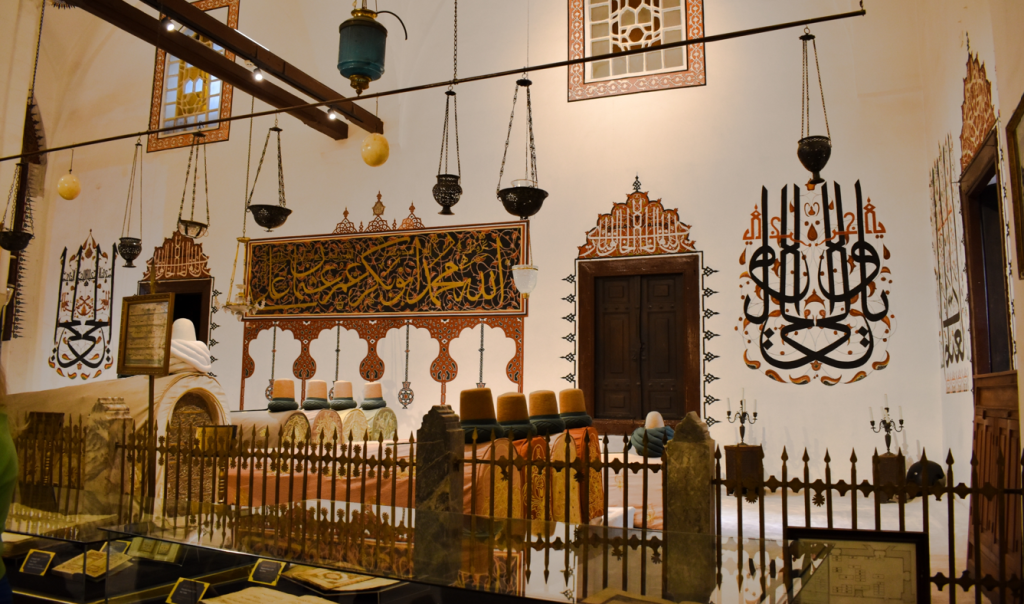
09:00-12:30 Transfer to Konya. Arriving around midday. After lunch, we begin with the Konya Ethnography Museum, where regional carpets and domestic objects provide a grounding in everyday Seljuk and post-Seljuk life. We then visit the Mevlana Museum, entering the world of Sufi philosophy and considering how ideas of inwardness, restraint, and rhythm shaped Seljuk aesthetics.
Throughout the afternoon, we discuss Konya’s historical association with restrained-palette pile carpets alongside village flatweaves used in ritual and domestic contexts.
Dinner at 19:00. Overnight in Konya.
Day 4 October 19, 2026, Monday– Geometry, Trade, and the Seljuk Worldview | Konya
09:00 In the morning, we visit the Seljuk Tile Museum and the Alaaddin Mosque, reading architecture as a system of measured relationships. Here, geometry does not compete for attention but disciplines it—guiding perception through repetition, proportion, and rhythm. Village markets offer a contrasting model: informal, seasonal, and socially embedded systems of exchange.
After lunch, we travel to Sultan Han, one of the great Seljuk caravanserais. We discuss caravan routes as arteries through which not only goods but also ideas circulated. Later, we will visit a carpet repair workshop, where we move from theory to structure, and wear patterns as deliberate cultural choices rather than accidents of use.
Dinner at 19:00. Overnight in Konya.
Day 5, October 20, 2026, Tuesday – Trade Cities and Urban Carpet Traditions | Konya → Kayseri
09:00 In the morning, we depart Konya for Kayseri, arriving around midday. Before lunch, we visit the Seljuk Museum of Kayseri. After lunch, we explore the city’s Seljuk and post-Seljuk landmarks, including the Great Mosque, Vezir Hanı and Bedesten, Hunat Camii, and the Kiçikapı historic quarter with its traditional Armenian houses. A visit to a historic Armenian church highlights Kayseri’s multi-communal past.
Throughout the afternoon, we discuss Kayseri’s long association with high-quality pile carpets tied to urban workshop traditions, commerce, and regional trade networks.
19:00 Dinner. Overnight in Kayseri.
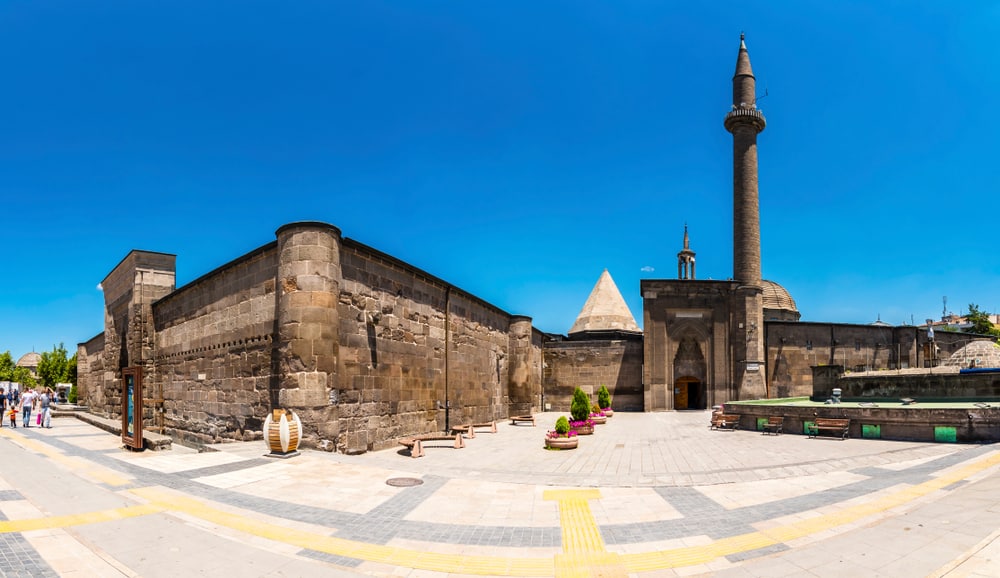
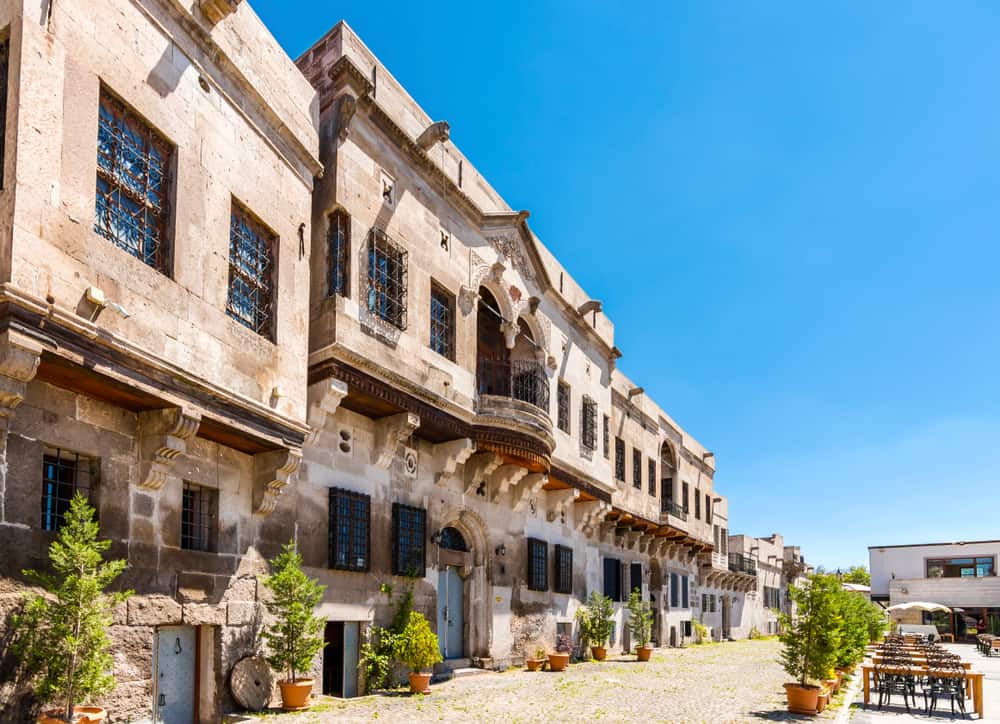
Day 6, October 21, 2026, Wednesday– Shapes and Abstraction | Kayseri → Sivas
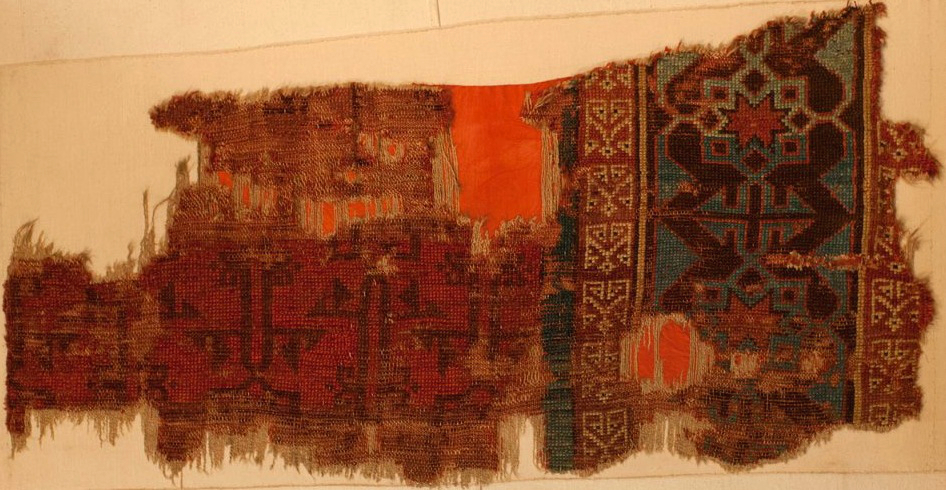
08:00-08:30 Early in the morning, we visit the Döner Kümbet and Karamanlı Cemetery, where we see the Christian Karamanlı community’s heritage before continuing our journey to Sivas. Arriving at Sivas at noon, we will have lunch. After lunch, we spend the afternoon immersed in Sivas’s extraordinary Seljuk madrasas: Gök Medrese, where we will have the opportunity to examine early carpets from the area, Şifaiye Medrese, Çifte Minare Medrese, and Buruciye Medrese.
As we move through these institutions of learning, medicine, and theology, we consider how their geometric clarity parallels the abstraction found in Central Anatolian village carpets—where meaning is conveyed through structure, repetition, and disciplined variation.
19:00 Dinner and overnight in Sivas.
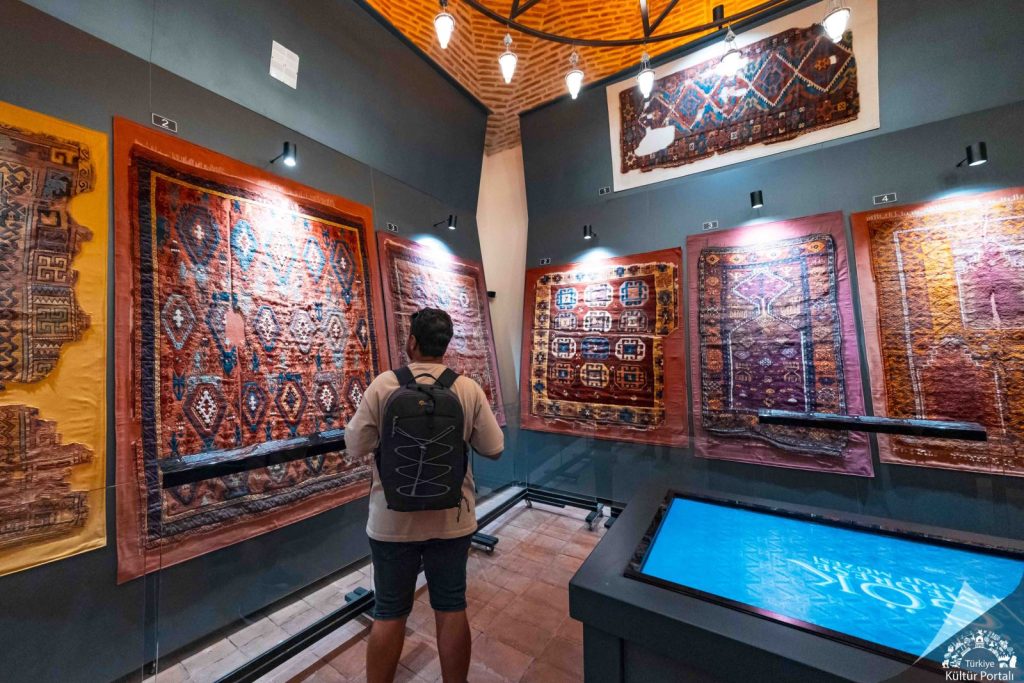
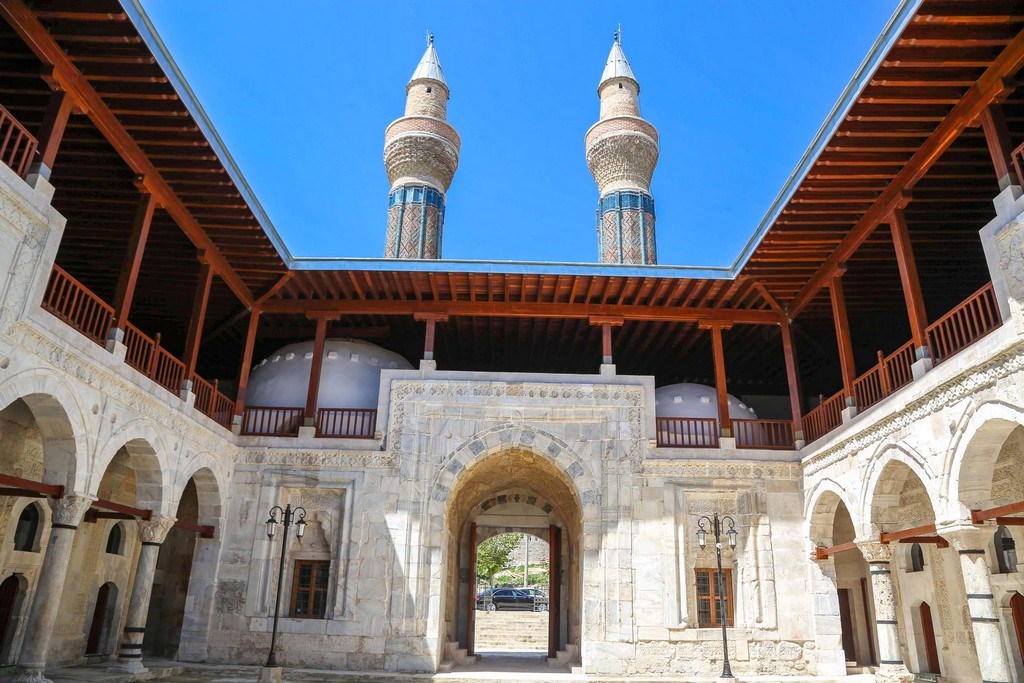
Day 7, October 22, 2026, Thursday – Caravan Routes, Scholarship, and Sound | Sivas → Tokat → Sivas
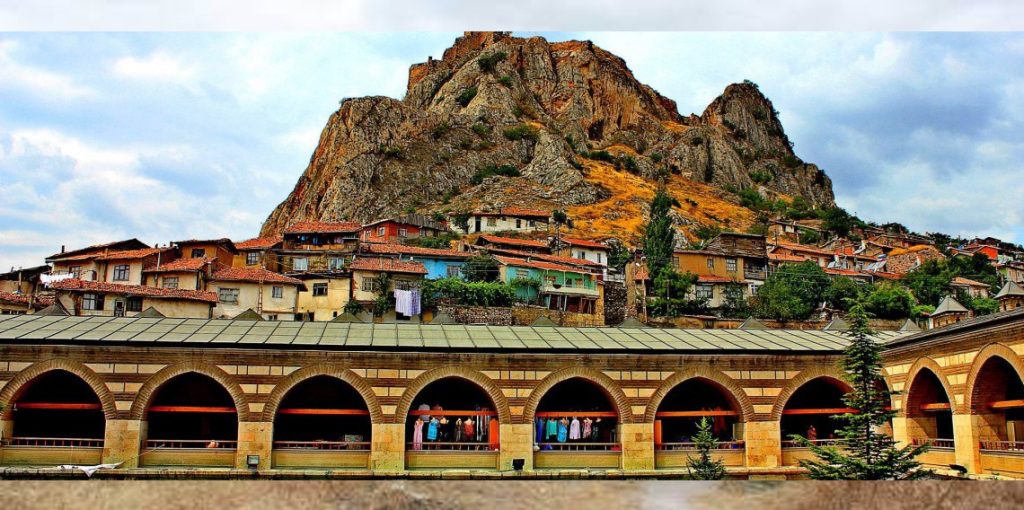
08:00, we travel to Tokat, a key node along historic caravan routes. Late in the morning, we visit Taşhan, where we will see the traditional production of textiles, especially Anatolian village headscarves, decorated with the blockprint method. Later, before lunch, we will visit Gök Medrese and Yağıbasan Medrese, which is one of the earliest medreses in Anatolia, discussing Tokat’s role in trade, education, and regional administration.
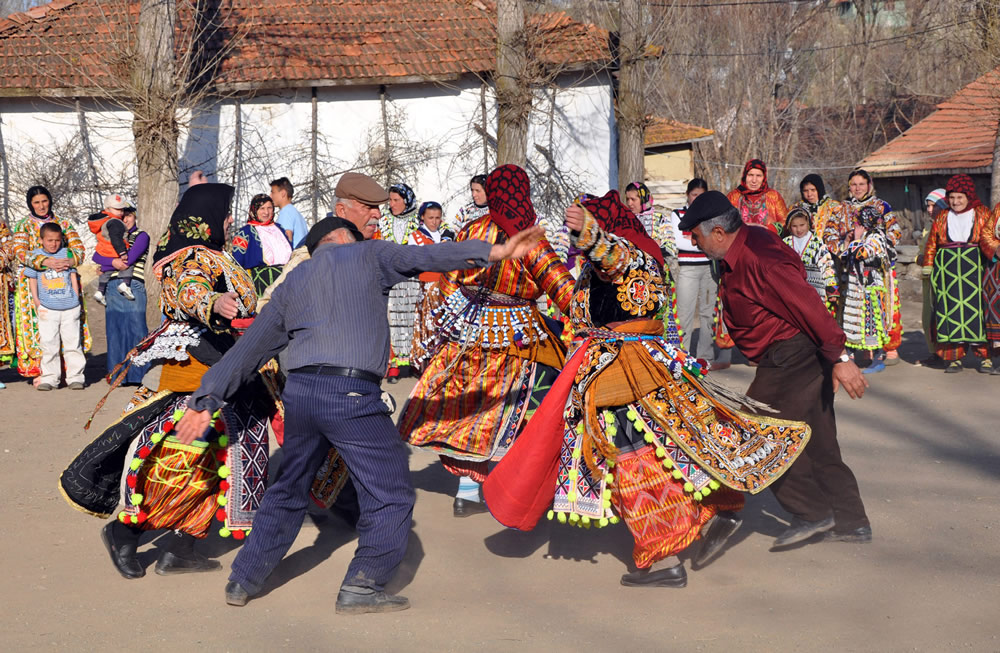
We will have lunch in a very special village where Turkmens from the Begdili tribe will perform a local musical ritual of Alevi belief, the “semah” dance, for us. Do not miss the local daily garments of village women. After lunch, the afternoon is devoted to a local music experience, allowing us to explore sound as another form of patterned tradition—parallel to textiles and architecture.
19:00 Dinner and overnight in Sivas.
Day 8, October 23, 2026, Friday – Local Culture, Civil Legacy | → Tokat → Sivas
We visit the Tokat Museum, the collection offers a concise but illuminating overview of the region’s archaeology and material culture — from Bronze Age finds to Seljuk and Ottoman artifacts.
A short walk brings us to the Latifoğlu Mansion, one of Tokat’s finest surviving Ottoman houses. Painted wooden ceilings and domestic textiles, the mansion offers insight into 19th-century elite life in Anatolia and the aesthetics of Ottoman domestic architecture.
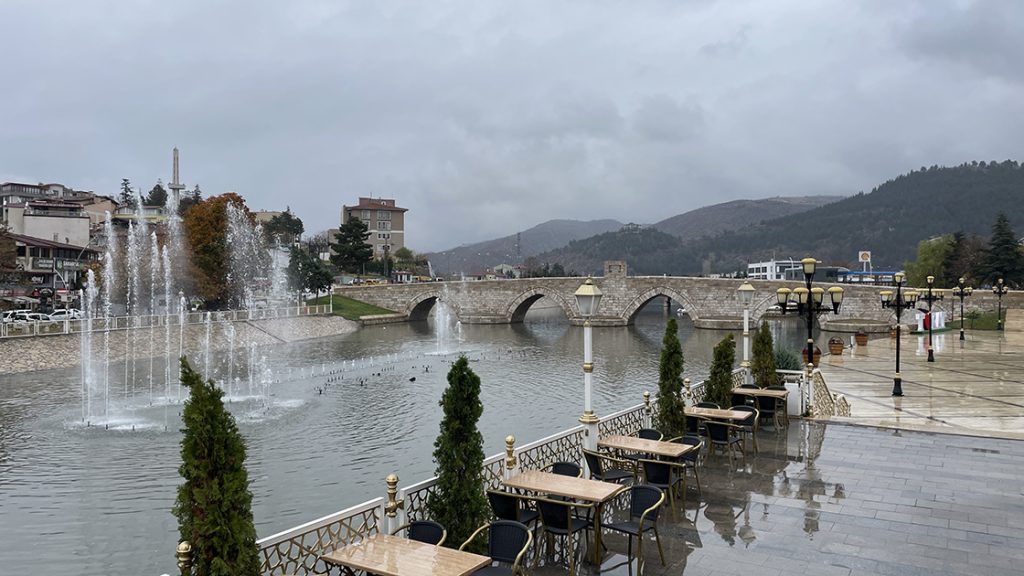
We continue to Hıdırlık Bridge, an elegant historic stone bridge spanning the Yeşilırmak River. Beyond its architectural charm, the bridge allows us to reflect on Tokat’s importance along historic trade routes connecting inner Anatolia to the Black Sea.
We depart Tokat and drive south toward Sivas. Upon arrival in Sivas, we enjoy lunch at a local restaurant, sampling regional Central Anatolian cuisine. After checking into our hotel, the afternoon is free time at leisure.
Dinner and overnight in Sivas
Day 9, October 24, 2026, Saturday – “Sacred Stone” and Regional Expression | Sivas → Höbek → Divriği
09:00 In the morning, we travel to Höbek, where late morning and early afternoon are devoted to a local music performance and extended discussion on carpets, symbolism, and regional weaving traditions. Lunch is shared in this setting, allowing conversation to unfold slowly.
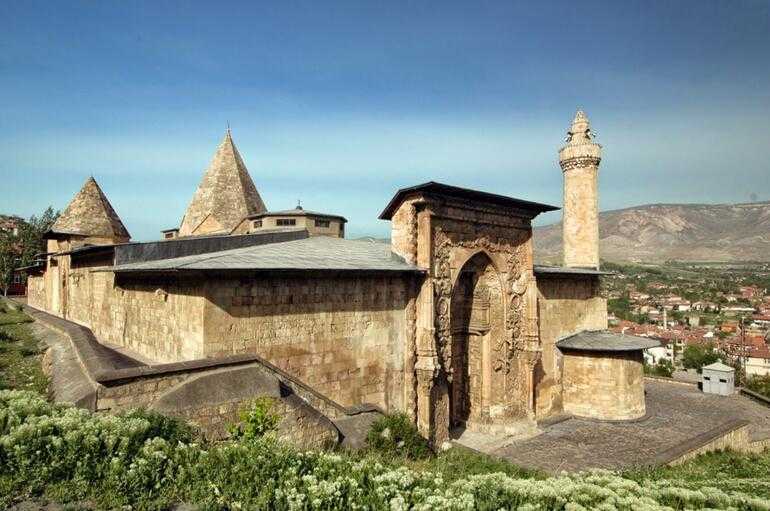
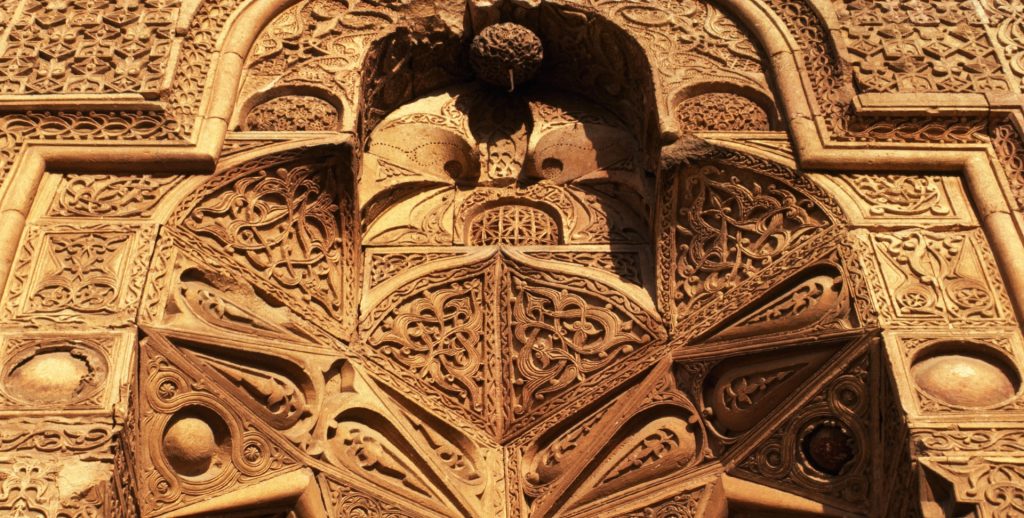
14:00 In the afternoon, we continue to Divriği. Here we visit the Great Mosque and Hospital, a UNESCO World Heritage Site, where stone carving reaches an almost ecstatic level of abstraction. We walk through the historic town, considering how sacred architecture, craftsmanship, and regional identity converge.
19:00 Dinner and overnight in Divriği Town.
Day 10, October 25, 2026, Sunday – Nomadic Worlds and Cosmology | Divriği → Yama Mountain → Malatya
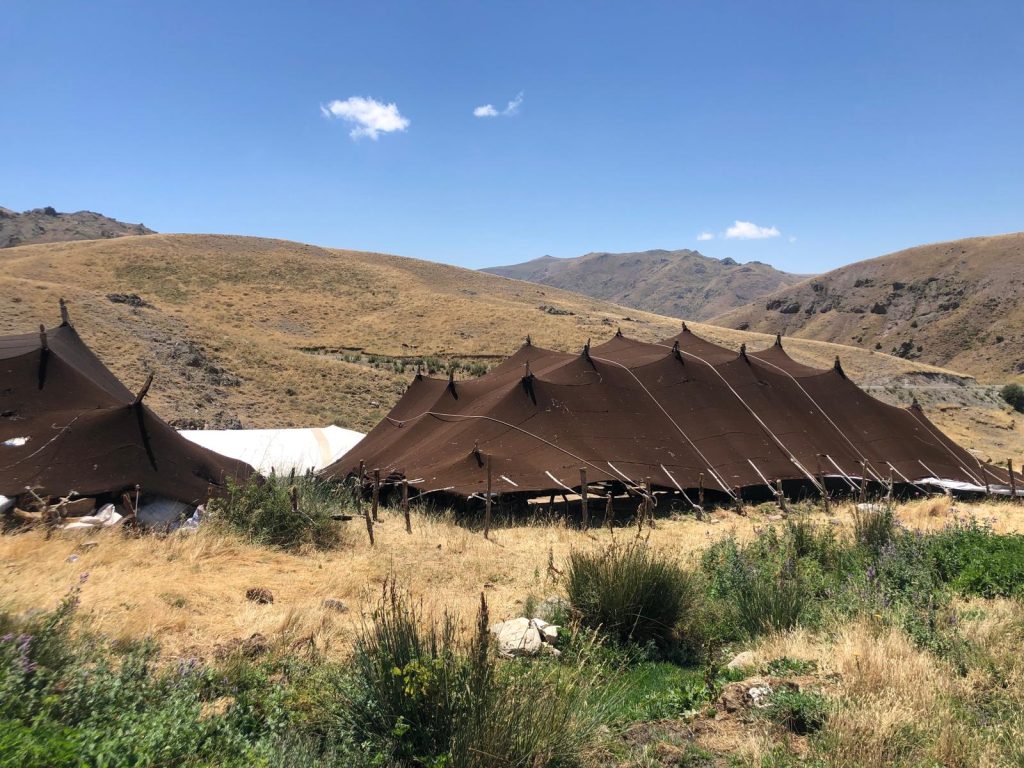
08:00 In the morning, we ascend to Keş Pasture on Yama Mountain. As architecture recedes, we speak about rhythm, movement, and impermanence. With the Drejan nomads, we explore how textiles replace walls, archives, and monuments. Flatweaves serve as shelter, boundary, and cosmological map; motifs function as protective signs, clan identifiers, and expressions of belief. We will have lunch with the tribespeople in their tent.
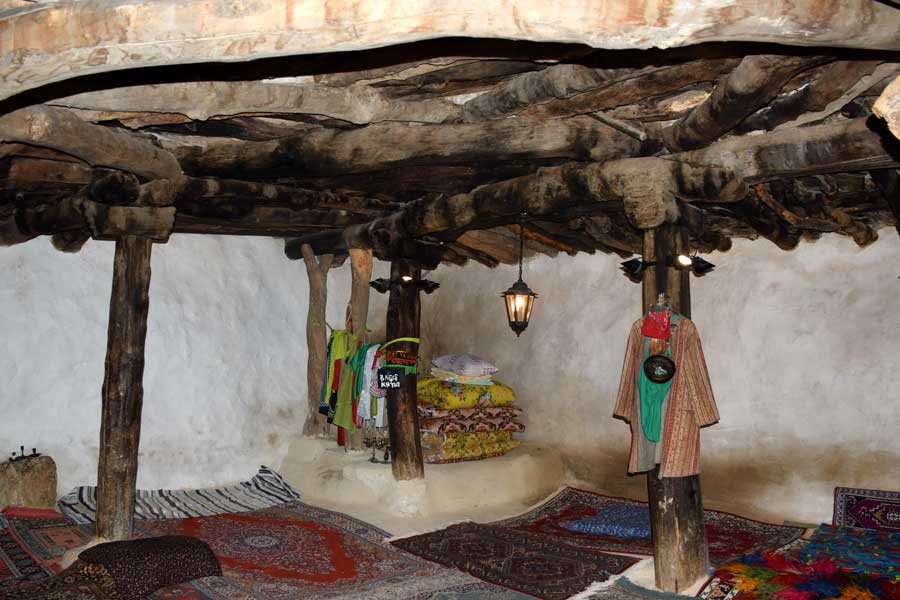
13:00-17:00 in the afternoon to Onar Village, where we see the oldest Alevi ritual lodge remaining from the Seljuk era, and briefly discuss Alevi-Bektashi concepts of sacred lineage and spatial symbolism. We continue on to Malatya city center.
19:00 dinner and overnight in Malatya
Day 11, October 26, 2026, Monday – Return and Conclusion | Malatya → Istanbul
09:00 In the morning, we transfer to Malatya Airport and fly to Istanbul with the flight of 14:50-16:50, TK2633. Arrival at Istanbul airport in the afternoon marks the conclusion of our journey—a passage through Seljuk Anatolia that has connected monuments with material culture, and history with living tradition.
Tour price:
USD 4,650.00 per person staying in a double room + USD 675.00 for single stay supplement
Services included in the price:
*Accommodation in the best possible hotels in American standards,
*All meals- à la carte
*Entrance fees to the historical sites/museums
*Bottled drinking water at all times
*Comfortable AC transport within the country:
*Coaster for 8-10 pax (18 seater);
*Two domestic flights (Istanbul-Ankara, Malatya-Istanbul)
*Professional state-licensed English-speaking guide – Deniz Coşkun
Services NOT included in the price:
*International flights
*Gratuity to the tour leader and bus drivers
*All alcoholic beverages
*Phone calls, laundry, and room service at the hotels